


As tornado season approaches, local emergency officials and university leaders are emphasizing preparedness, especially for students unfamiliar with severe weather in the Midwest.
Fire Chief Gerald Ezell said the city closely monitors storm activity and only activates sirens when there is a direct threat to the area.
“We especially watch if a storm cell is making a line for the city limits,” Ezell said. “If it’s going to touch any part of Joplin, that’s when we’re going to sound the sirens,” Ezell said.
Ezell explained that the department operates a “war room” equipped with multiple screens tracking radar, field reports and live storm coverage. In addition to tornadoes, sirens may also be activated when destructive winds of more than 75 miles per hour are approaching the city.
Preparedness efforts in Joplin have been heavily influenced by the devastating 2011 Joplin tornado.
“One of the biggest challenges was that we used to plan for like water to cut off half the city. We actually had a tornado path that went right through. It split the city in half,” Ezell said. “We even had fire stations destroyed, and firefighters trapped inside,” Ezell said.
He added that during large-scale disasters, mutual aid plays a critical role. “We had hundreds of engine companies coming in from across the state and even out of state,” Ezell said.
Today, the city relies on seven fire stations and coordinated emergency response systems to handle severe weather events.
Since 2011, safety protocols in schools have changed significantly. Many schools in Joplin now include FEMA-certified tornado shelters that are also available to the public during emergencies.
Ezell emphasized that traditional safety methods, such as gathering in hallways, are no longer recommended.
“You’re looking for an interior room with no windows. If you don’t have a tornado shelter, that’s where you need to go,” Ezell said. “Classrooms are not a good place to put people.”
He also stressed the importance of communication between schools and emergency services, noting that officials remain in constant contact during severe weather threats.
Ezell said one of the most common misconceptions is that people underestimate tornado warnings due to past overuse of sirens.
“There was a time when sirens went off so often that people became almost tone deaf to them,” Ezell said. “Now, if you hear the sirens, you know there’s something coming,” Ezell said.
Gerald Ezell encourages to follow the instructions from teachers during school hours and to seek shelter in interior rooms or basements when at home.
For international students at Missouri Southern State University, tornado season can be especially stressful due to unfamiliarity with severe weather.
According to Hectór Moreno, an officer of the university’s International Student Club, education is key to reducing fear.
“We make sure students understand the difference between a tornado watch and a warning, where shelters are, and what to do,” Moreno said. “The biggest concern is not knowing how to deal with it,” Moreno said.
Moreno added that many students are initially alarmed by how common tornadoes are in the region, often overestimating how frequently they occur.
“They are scared of I as a destructive natural phenomenon that they’re not used to,” Moreno said.
The International Student Club works closely with the university to provide safety information during orientation and throughout the semester.
“We remind students through texts and meetings whenever is expected,” said Mansour Alaql, president of the club and a paramedic student.
Alaql said safety is the top concern among international students during severe weather events.
“They ask ‘Am I safe? Where can I go? Is the tornado going to touch near me?’” Alaql said.
The university also uses emergency alert systems to notify students in real time.
Alaql recalled experiencing his first tornado in 2022, describing it as a frightening and uncertain situation.
“It was a horrific experience running away from the unknown,” Alaql said.
Because of this, he stresses the importance of preparation, including knowing shelter locations and having emergency supplies ready.
“Expect the worst and hope for the best,” Alaql said.
Both Moreno and Alaql agreed that while the university provides strong resources, continuous education and support remain essential.
“It only takes one bad tornado to ruin a life,” Alaql said. “Don’t let it be yours,” Alaql said.
For Moreno, the key is ensuring that students feel supported during emergencies.
“We need to remind them, check on them, and make sure they understand what is happening,” Moreno said.
As tornado season continues, officials and student leaders like stress that awareness, preparation and communication can make the difference between panic and safety.
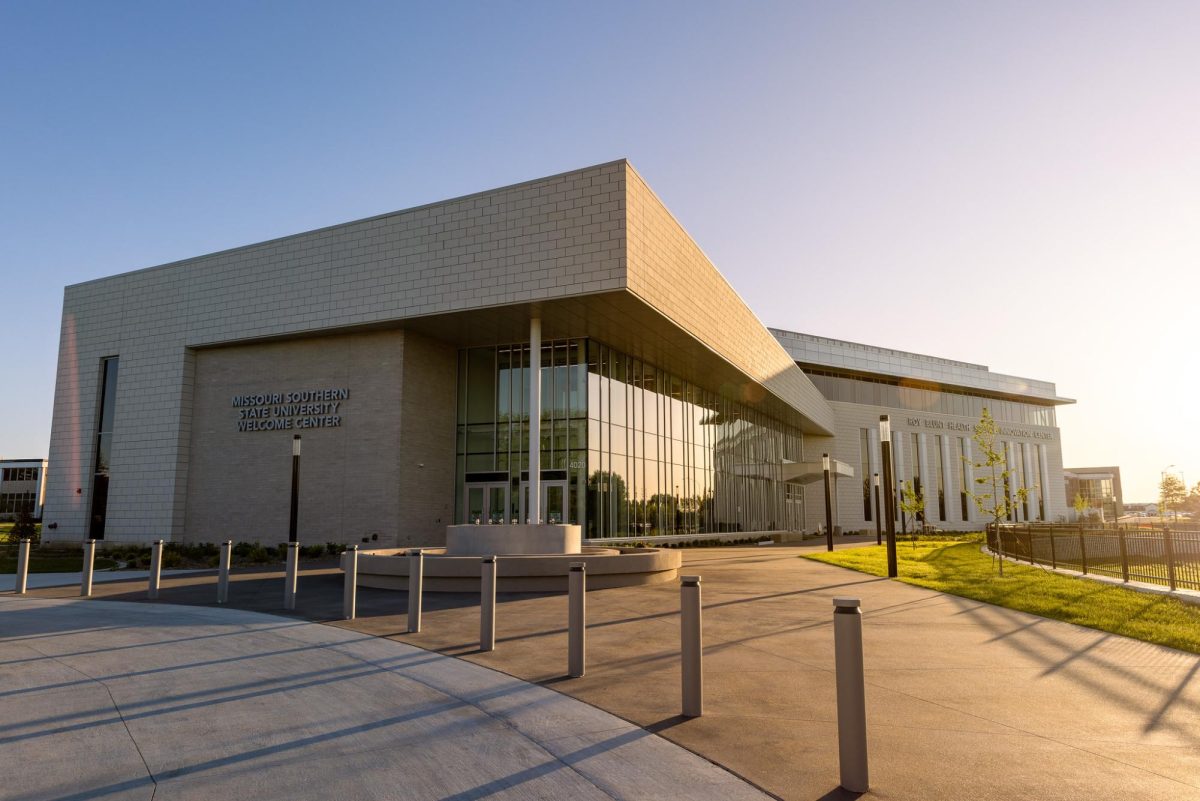
Storm shelters at MSSU can be found at the following locations on campus.
Residential Life Buildings: Dianne Mayes Student Life Center, East Hall, FEMA Shelter, Lion Village.
Academic Buildings: Billingsly Student Center, Mills Anderson Public Safety Center, Julio S. Leon Health Science Center, Plaster Center, Spiva Library, Taylor Hall, Ummel Technology Building.
Fine Arts Complex: Taylor Performing Arts Complex.
Administration: Hearnes Hall, Ralph L. Gray Alumni Center.
Athletics and Recreation Buildings: Leggett & Platt Athletic Center, Robert Ellis Young Gymnasium, Ron Richard Athletic Center, Student Recreation Center.