


Visiting artist, Marina Kassianidou, spoke with MSSU students and attendees of her art exhibition, Shapes the World Could Have Taken. Before presenting the exhibition in the Cragin Art Gallery on Feb. 23, Kassianidou spoke briefly with MSSU students about her art experience, and how she has become the artist she is today.
She also provided guidance to students who wanted to discover their artistic identity. She explained how artists need to test various approaches during their creative journey to develop their individual artistic styles.
By Logan Mercier
Born and raised in Cyprus, a small island in the eastern Mediterranean, when Marina Kassianidou discovered the markings of lines, the concept itself flourished in her homeland. “The recent history of Cyprus, my home country, has itself been defined by a line,” said Kassianidou to the attendees of her presentation in Corely Auditorium. “The so-called green line, which divides the island and determines people’s occupation of movement through space.” Though entirely coincidental, it seems cosmic fate that Kassianidou would dedicate her creativity to exploring the meanings of markings and lines, though in a much more artistic way than the political line that runs through her home country.
“My work examines relationships between mark’s surface and major material” said Kassianidou when introducing her work. “I specifically focus on the process of mark making. Some of the questions I keep thinking about are how can I mark a surface or space? What kinds of meanings might arise through those marks? And how might those marks affect the viewer?”
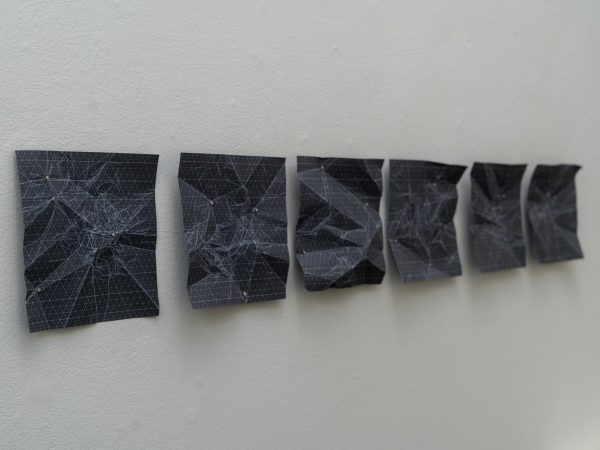
The link between mark and surface works together with actual art creation according to Kassianidou. One of her most remarkable artworks showed her talent to create art from common materials through her process of imitating cracks which appeared on cement floors. She believes through this method that every surface contains artistic value which artists should discover by understanding its possibilities.
Working with surfaces found in her immediate surroundings, including graph paper, plywood, adhesive vinyl, pattern fabrics, and security envelopes, Kassianidou’s artistic influence always relates to something that is already there on the surface.
“Whenever the marking tool of an artist touches the surface, it leaves a mark behind,” said Kassianidou. “That mark acts as the trace of the encounter between artist and surface. It always involves a relationship.”
Though examining this concept has become the focus of Kassianidou’s work, the process of realizing it took considerable influence.
“I didn’t always make work in this way,” said Kassianidou. As an undergraduate student, her focus was painting; however, when beginning her master’s degree in London in 2004, an interest in the materiality of pain would guide her toward an even larger interest in the materiality of surfaces. “So, about 17 years ago, I refocused my practice and began making work that emphasized the relationship between marker and surface and the collaborative between artists and material.” Works by Dorothea Rockburne, Louise Hopkins, and Catherine de Zegher have also served as inspiration for Kassianidou’s art.
In her exhibition, Shapes the World Could Have Taken, Kassianidou welcomes students to observe surface appearance and discover the overlooked details of ordinary materials. In her series Masquetry, a project Kassianidou has worked on since 2014, the artist examines a use of natural markings as a contrast against manufactured materials. Consisting of collages and drawings on wood, engineered wood, laminate, and wood pattern adhesive vinyl, Kassianidou brings attention to artificially crafted etchings against surfaces.
“When I’m working with these materials, I’m playing with this circularity between material and image,” said Kassianidou. “With this idea of converting materials into images, images into materials, and engaging in conversations on this slippage between image and materiality or artifice and nature.” Kassianidou’s exhibition will be on view at Cragin Art Gallery through Mar. 25.
Within her practice, Kassianidou has studied at Standford University, Central St. Martins, and Chelsea College of Arts. Today, she is an associate professor at Colorado University in art practices and has exhibited her art internationally. In her art practice, Kissanidou says she is not content until a conversation happens, so she is creating conversation through art, and leaving a mark behind.
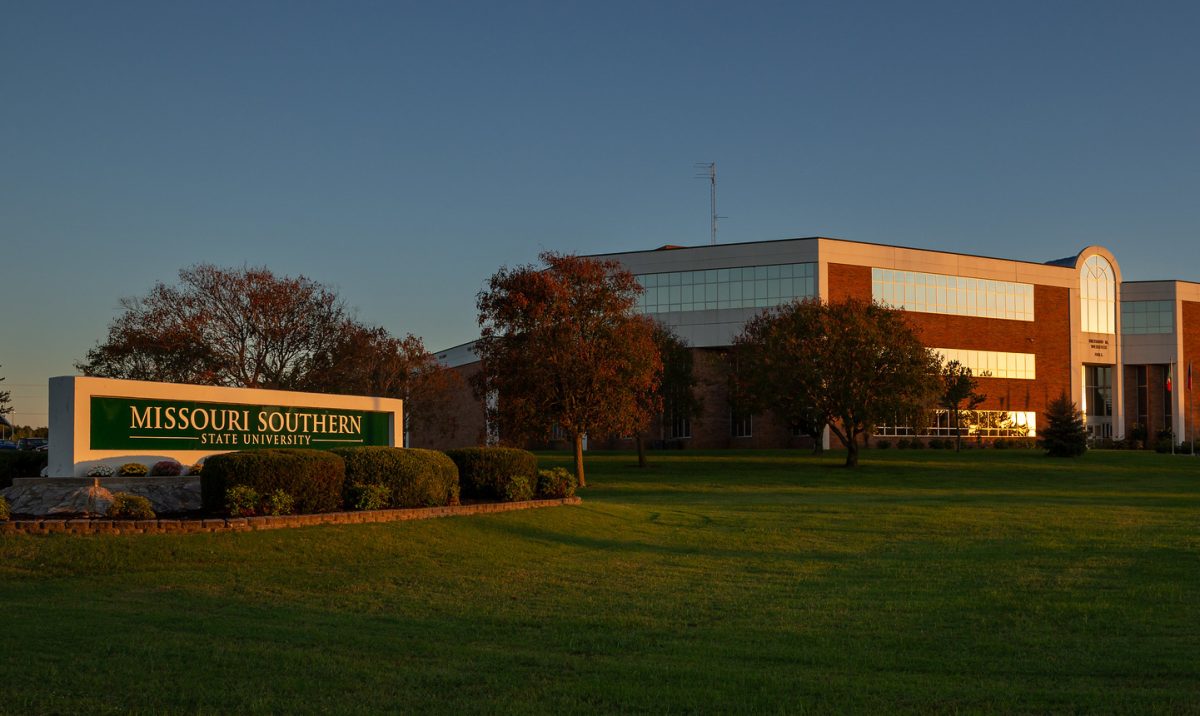
Kassianidou’s visit was part of the Craig Art Gallery’s ongoing efforts to connect students with working artists and broaden perspectives on contemporary art practices. Students interested in attending future artist talks, exhibitions, and campus events can find more information and upcoming announcements by visiting the Missouri Southern State University website.