

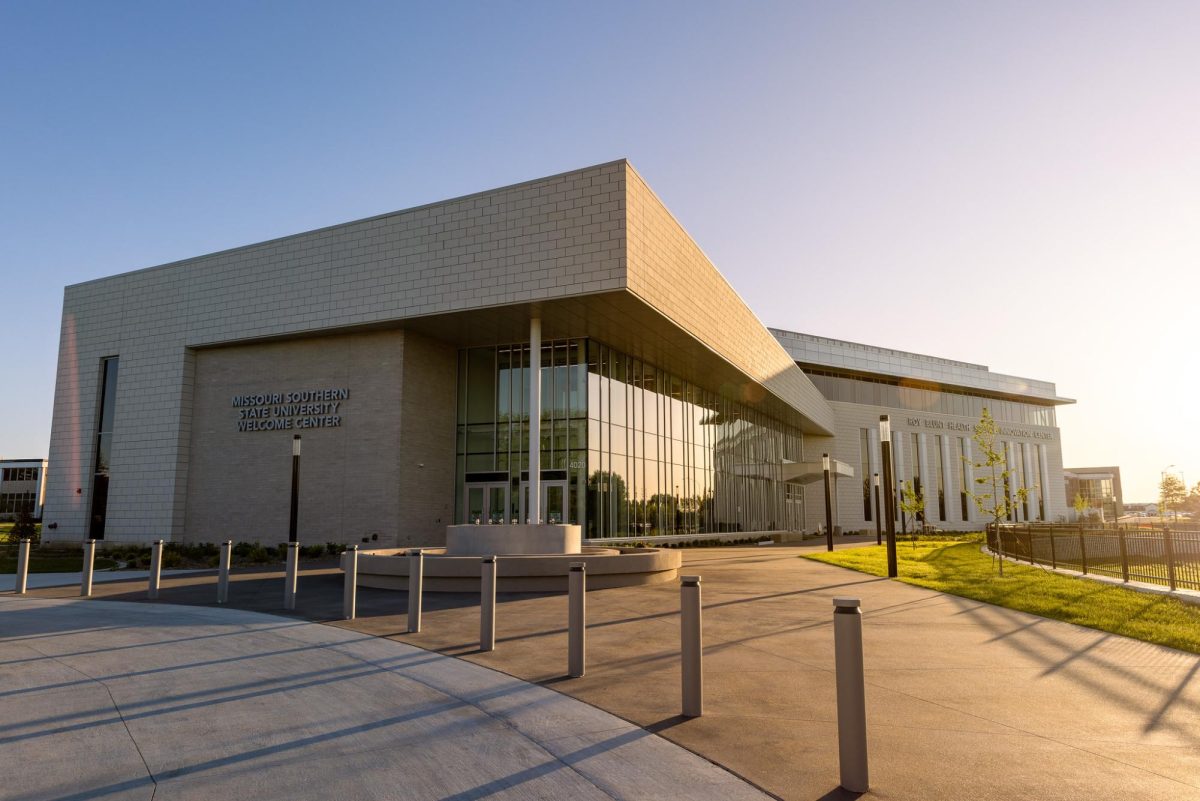




On February 17 at 6pm, Joplin City Council held its meeting at Corley Auditorium. Choosing to pass the annexation for land for the proposed data center in a 6-3 vote.
The meeting, formally moved to Missouri Southern State University due to an expected large attendance, brought roughly 200 Joplin residents through Webster Hall’s doors to both sit-in and give personal testimonies to the council. Most of these public testimonies continued to focus on council bills 2026- 256 and 2026-257, both of which encompass the annexation and rezoning of Wildwood Ranch, a roughly 600-acre property proposed to house the construction of a data center.
After hearing almost 4 hours of public testimony, Joplin City Council members gave their final vote on the bills. Annexation passed 6-3, and rezoning passed 7-2, an identical consensus to the council members’ last vote at their Jan. 20 meeting. The final vote has brought mostly negative feelings from Joplin residents, and the meeting reflected a conflicting mix of opinions throughout its duration.
“Before we move into this next session, which is what the majority of you are here for this evening,” said Mayor Keenan Cortez during the introduction of the annex ordinance, “Here’s a reminder of housekeeping items.”
Due to the overwhelming interest in presenting public statements, Cortez instructed speakers of the 3-minute limit of speaking time they were allowed; two-minutes less than the 5 minutes allotted at the previous January session.
Troy Bolander, Joplin director of planning, development, and neighborhood services was one of the first individuals to speak on the matter.
“The annexation is reasonable and necessary for the growth of the city of Joplin,” said Bolander, a stark contrast to the opinions held by Joplin residents who spoke only minutes later.
“Data centers require hundreds of thousands, and in some cases, millions of gallons of water per day while Joplin is currently experiencing drought conditions,” said one of the Joplin residents who spoke against the data center’s construction.
Many residents shared feelings like this statement, as worries of electrical cost, water use, rising utility bills, and noise complaints stood as foundations of concern for Joplin civilians. Some residents were more outspoken about their approach to voice this worry, and multiple civilians in attendance had to be escorted by law enforcement out of the venue due to disruption.
Along with this, public distaste for council members reigned throughout the meeting. Council member Ryan Jackson served as a point of public scrutiny multiple times throughout the council session; most of which was due to civilians calling out Jackson for being on his phone while residents gave their testimonies.
“The demand for the data center is artificial, along with the intelligence of the council that sits before me,” said one of the resident speakers’ moments after Jackson’s personal callout from attendees.
Jimmer Pinjuv, land developer, and lead interest in building a data center on the Wildwood Ranch property, also spoke out during the meeting.
“A lot of these things are just out of thin air,” said Pinjuv in retaliation to the concerns voiced by Joplin residents. “The statistics about the operation of the facility are completely erroneous.”
Following his testimony to the council, some attendees in the crowd vocally spoke out against Pinjuv’s claims. When one of the individuals asked to speak with Pinjuv outside of the auditorium, due to Mayor Cortez’s instructions, Pinjuv refused to speak with the resident.
Joplin Sustainable Technology Alliance, whose stance against the data center has brought forth public petitions, was also in attendance. The non-profit set-up a booth at the entryway of Webster Hall, welcoming attendees to sign their petition that would challenge the council’s vote and place the voting decision in the hands of the public. Signs opposing the data center were offered by the organization to attendees, and many held up the signs as a form of protest during the meeting.
“Can you drink money when the data center steals and poisons all of our clean water?” asked one of the speakers to the council. “Will money quench your thirst when your judgement day comes? I hear hell is hot.”